
THIS EVENING’S PERFORMANCE
A PROJECT BY ZOË IRVINE
During lockdown, Spring 2020
As the theatres and opera houses of Europe closed their doors due to the Corona Virus pandemic, this project was created to connect performers and audience.
We designed a call centre that connected audience members by phone to a behind the scenes world of cancelled opera productions. The call centre agents, all people involved directly in the operas; there were stage directors, composers, administrators, casting agents, choreographers and musicians and performers. They took on the role of telephone ushers for the callers guiding them to a selection of recorded material. The ushers were open to conversation welcoming callers to the world of their production whether the caller was new to opera or an aficionado.
Music for the Unconscious Mind
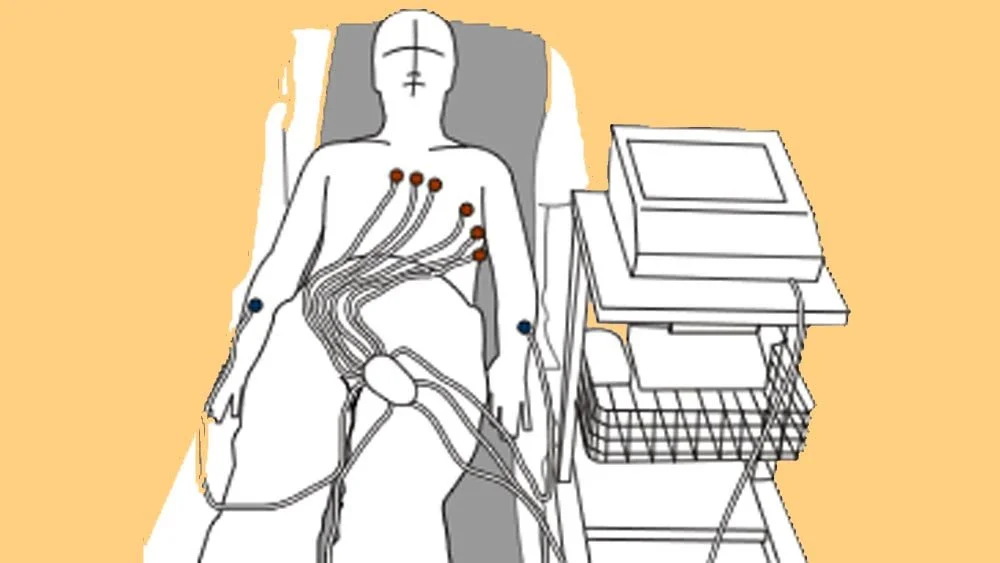
An installation for isolated reclined listening in a darkened room, Music For the Unconcious Mind is created using sound recordings from hospital intensive care units combined with a version of The Goldberg Variations by J.S.Bach, midi sequenced to play the sound of ECG machines (heart monitors) and other hospital equipment alarms.
Visitors to the work are invited to recline on a treatment table (the kind typically used for massage or physio) in a dark space. They are immersed in the soundscape of a hospital intensive care unit (ICU). Machines alarms are going, trollies passing, doctors and nurses talk, ventilators breath, patients cough and every few minutes the beeping monitors order themselves and play out one of Bach’s Goldberg Variations.
The Edible Pet

Radio broadcast 38mins, commissioned by Radiophrenia 2016
The Edible Pet was created by Zoë Irvine and her son Logan, with contributions from family and friends in Edinburgh, N. Ireland and SW. France. A story that travels from pet keeping to dining table, taking in some back garden ethics, pet psychology, trans-species music making, dramatic mishaps, life, death and recipes.
There are some scenes of a graphic nature, this programme contains meat and may not be suitable for vegetarians.
Worker’s Union
by Irvine, Milling & Nelson
Film installation accompanying the performance of Workers Union by Louis Andreissen by Red Note Ensemble for the Lammermuir Festival 2016
From Andriessen’s notes on Workers Union:
This piece is a combination of individual freedom and severe discipline: its rhythm is exactly fixed; the pitch, on the other hand, is indicated only approximately, on a single-lined stave. It is difficult to play in an ensemble and to remain in step, sort of thing like organising and carrying on political action.
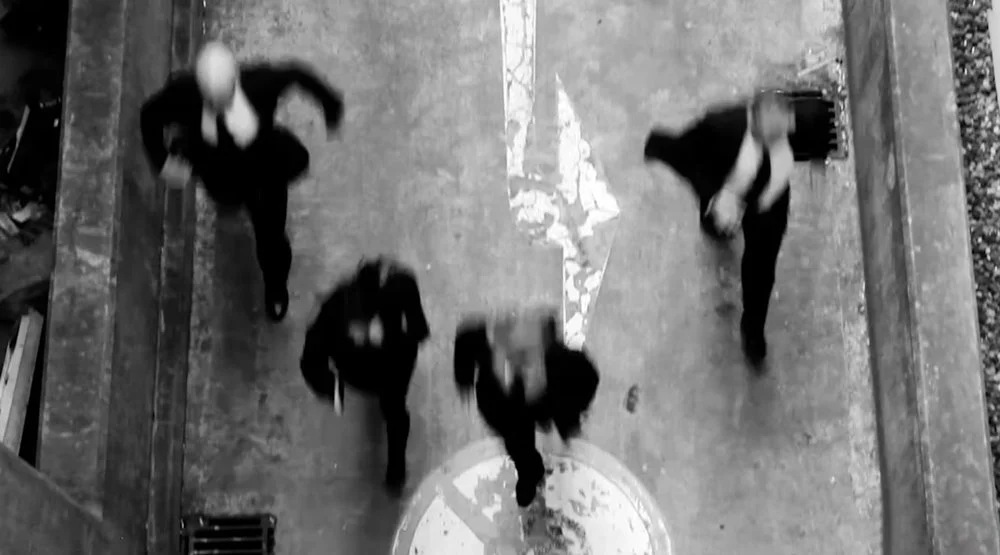
The black and white film, shown over multiple screens installed under Concorde surrounds the musicians as they embark on the musical marathon that is Andreissen’s Workers Union. We see a pack office workers perpetually running through a deserted business district, they negotiate stairs, civic squares, pavements, road crossings, on and on they go. No one breaks from the pack, they stick together. Some of them might be out of breath, some are fine. These are not unfamiliar with running, but normally clad in lycra after work in the gym.
DIAL-A-DIVA
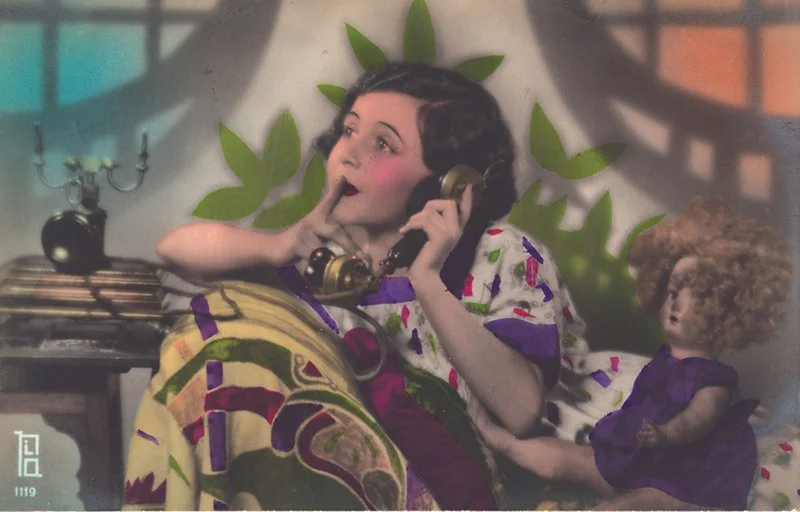
DIAL-A-DIVA was a 24 hour global telephonic singing event that took place twice. On the first occasion, 2005 the hub was in Glasgow (CCA Gallery) and then in Stavanger Norway in as part of the Stavanger2008 European Cultural Capital events.
The piece was experienced as either a performer, a phone listener or a visitor to the DIAL-A-DIVA call centre.
The phonecast started with performers in New Zealand, at the date line, then carried on with performances from Australasia, Asia, Africa, Europe and the Americas, arriving back at the date line 24 hours later. The programme of vocal performances included poetry, opera, choral works, rap, and songs of many types. In the Stavanger iteration DIAL-A-DIVA had over 200 performers and 36,000 listeners from all around the world.
ŠUMA
Promenade performance for radio transmission, Balkan Choir and woodland
30mins duration. 2015/16
The audience gathers, asked to bring portable FM radios they tune to the ŠUMA frequency. A rich drone gently builds, holding the space for the walk, for the woodland’s soundscape and the reconfigured Balkan songs of trees, fairies and woodlands, to weave in and out of one another.
ŠUMA is a collaboration with Kuchke, a 9 voice female Balkan Choir, it was commissioned for SanctuaryLab in the Galloway Forest in 2015. It was staged twice during the festival, once in daylight and once in darkness and has subsequently been performed at Non-stuff Festival, Knockengorroch World Ceilidh and Kelburn Garden Party 2016
The piece is experienced as a walk, it creates an immersive sonic experience rooted in the forest where the performance takes place, bringing resonance and harmonies from the forest of the Balkans. It was inspired by the rich biodiversity of the Galloway Forest where it was first performed and a repertoire of Balkan songs of trees and forests sung by Kuchke.
House Arrest: Domestic Actions
by Zoë Irvine & Pernille Spence 2016 (ongoing)
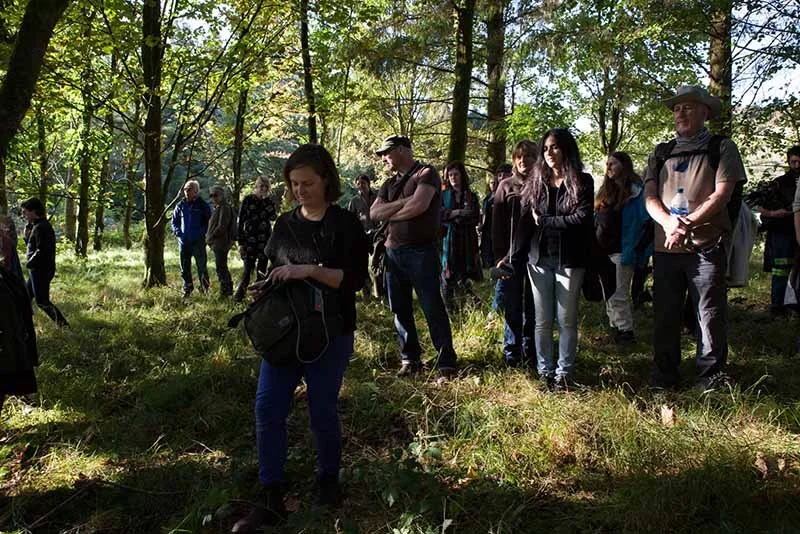
House Arrest: Domestic Actions is a six-screen installation with multi-channel sound.
In House Arrest: Domestic Actions the kitchen table is used as a stage for a
series of small scale, resonant domestic actions. Using ordinary and familiar
items such as eggs, cream, tea cups, an iron, kitchen utensils etc, Spence and Irvine perform a sonorous choreography to camera where actions allow for subtle transgressions. These slight contraventions of the norms of domestic behaviour bring heightened consideration to common household acts.
House Arrest continues to evolve. We are currently developing a single screen piece also. Versions of the installation have been shown as part of The Motherload, at the Hannah Maclure Centre Dundee (2016), the Alchemy Film Festival (2017) and as part of the Perth Dance Festival at Horsecross, Perth (2017).
Thank you to Hannah Maclure Centre, Abertay University, Edinburgh Napier University, Duncan of Jordanstone College of Art, University of Dundee and Schedule D Film Productions for their support.
see more of Pernille Spence’s work here.

By Zoë Irvine & Pippa Murphy
8 channel sound installation with displayed timecode (30 minutes duration)
The Scottish Parliament, Festival of Politics 2015
Democratic Resonance emerged from the artist residency in the Scottish Parliament undertaken collaboratively by Zoë Irvine (sound artist) and Pippa Murphy (composer).
For an extended period the two artists explored the building in sound, walking and talking. Their sonic curiosity inhabits a crossover territory between documentary field recording, ethnography and musical composition. This time of discovery was in the year prior to the Referendum on Independence, a very particular and heightened time within the building and country as a whole.
Recorded conversation was an important element. The artists met with many different people who work in the building and began to get a sense of all the different activities which contribute to the working of Parliament.
Democratic Resonances
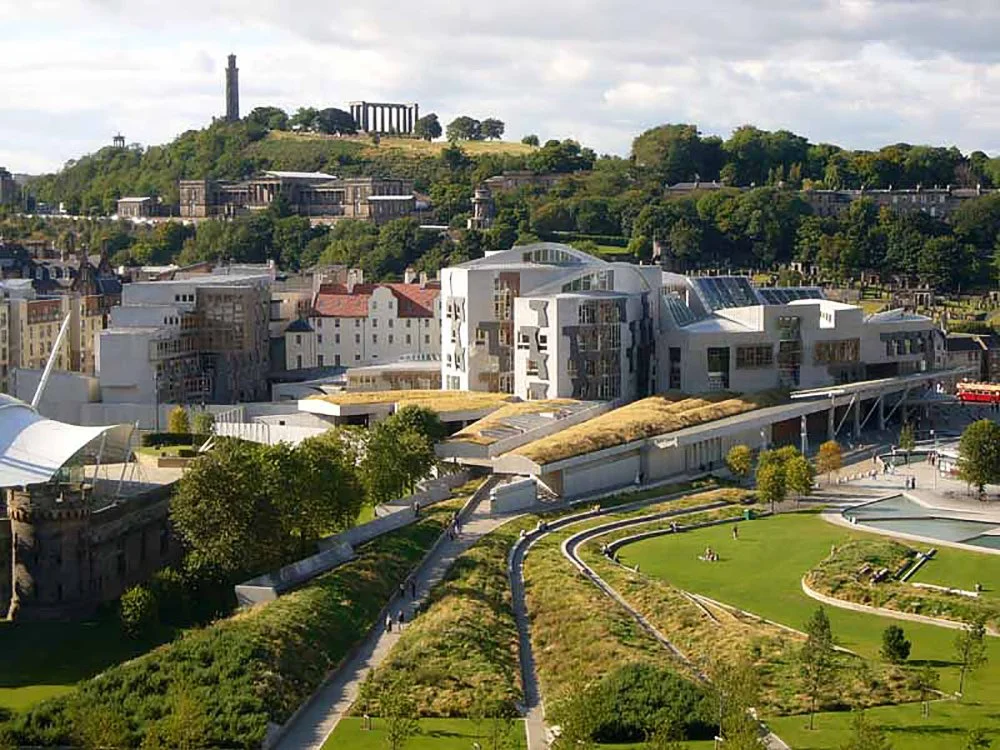
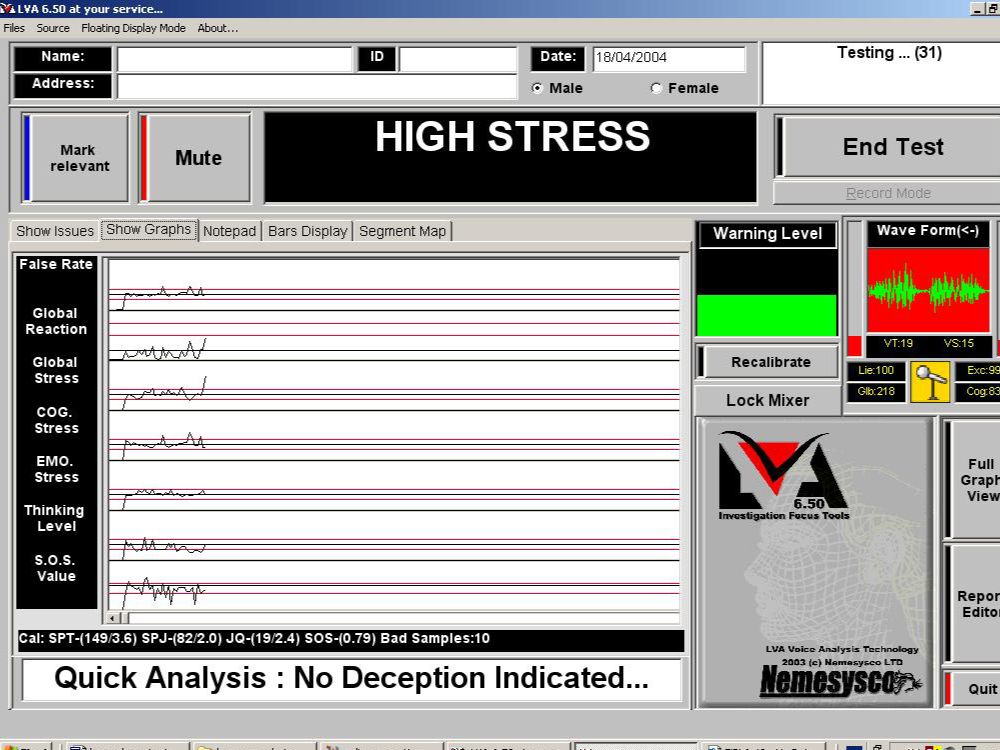
YOUR VOICE IS YOU, a self portrait, accessed by telephone, created with the use of LVA 6.0 a risk assessment voice analysis software. 2015
YOUR VOICE IS YOU explores the widespread use of voice analysis by government agencies and private companies. It is used as an ‘investigative focus tool’ or lie detector by law enforcement, border control and state level intelligence gathering. It is also used as part of risk assessment by private companies such as banks and insurance claims departments. Voice analysis can be carried out in interview settings or on the phone. It is completely non-intrusive. You may well have interacted with this software – claiming job seekers allowance, setting up a bank account, travelling across international borders, speaking with telesales people or phoning your insurance company.
In this work I used a market leading voice analysis software to analyse myself, having discovered I had inadvertently recorded 3 years worth of my voice in phone conversations on a malfunctioning phone app. I had been exploring the software in previous work – Eloquent Voice: Lies and Other Truths but had not been interested in whether or not the software ‘worked’ but simply the fact it was being used at all. When I began to work with my own voice I was very interested in what it picked up and categorized as truth, confusion, embarrassment, stress, excitement & anticipation and suspected lies and untruths.
YOUR VOICE IS YOU
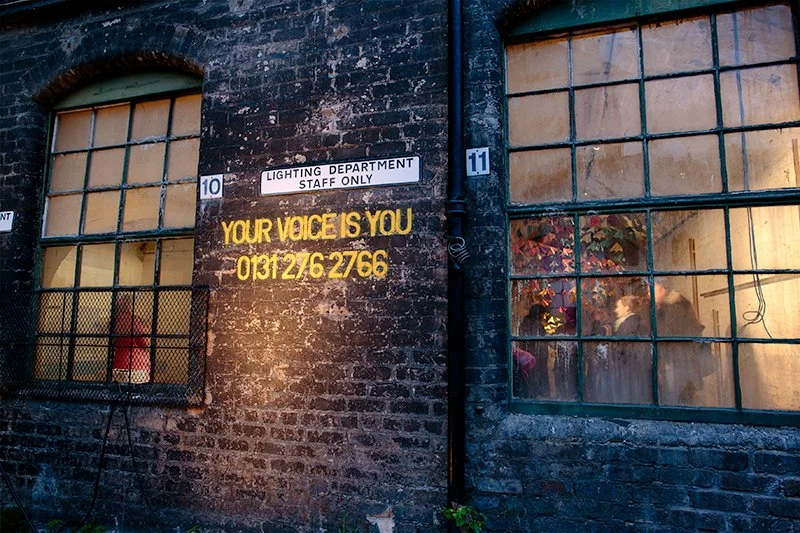
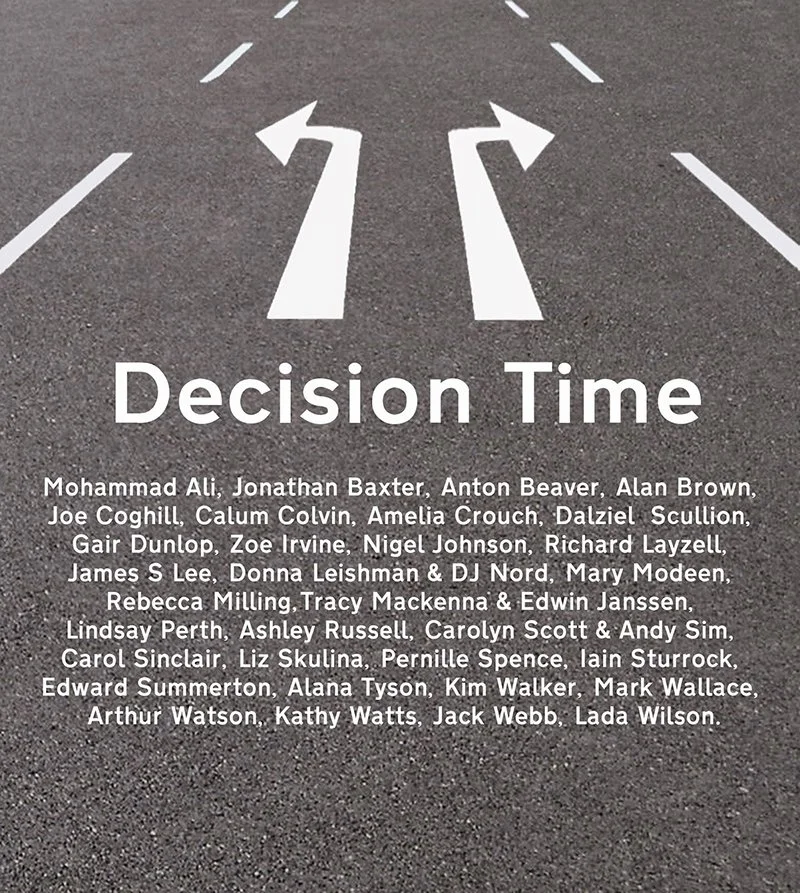
Decision Time was an exhibition of artworks, performances, talks and dialogues exploring decision-making in the context of the Scottish Referendum on independence curated by Zoë Irvine & Pernille Spence.
As time has progressed towards the referendum in 2014 people were engaged and debate was everywhere. When striving for objective knowledge to evaluate and make decisions, we were confronted, like all decisions, with subjective reasoning, hopes and fears.
Decision Time brought together works that explore, often playfully, individual processes, reflections and conclusions. Just like other members of the public, artists have researched, expressed their preferences, beliefs, feelings, affiliations, confusions and decisions.
The exhibition existed in the week before the historic referendum on Scottish independence.
The show was not party political, although there are different views expressed in some of the works. Decision Time was a celebration of the process of choosing, the act of deciding and the consequences of those choices.
Friday 12th September – Thursday 18th September 2014
DECISION TIME
Monologue performance with soundscape and accompanying projection of live voice analysis. 2013 & 14
This work explores the paradox of the disembodied, recorded voice as it takes on a corporeal currency with voice analysis. In the context of a commission from the international sound art festival Tuned City: Brussels, Irvine worked with recorded conversations from the Brussels Belongs to Us archive, subjecting them to biometric voice analysis. Phonemes that were flagged as ‘truth’ or ‘probable false’, terms used by Layered Voice Analysis software, the sound was then taken from its context and composed in such a way as create soundscapes of truth and untruth and a monologue that through it’s musical structure was rendered impossible to analyse in these terms.
The piece has been performed twice once at Tuned City: Brussels 2013 and again as part of Freedom & Taboo an event at the VRC, DCA Dundee 2014
Eloquent Voice
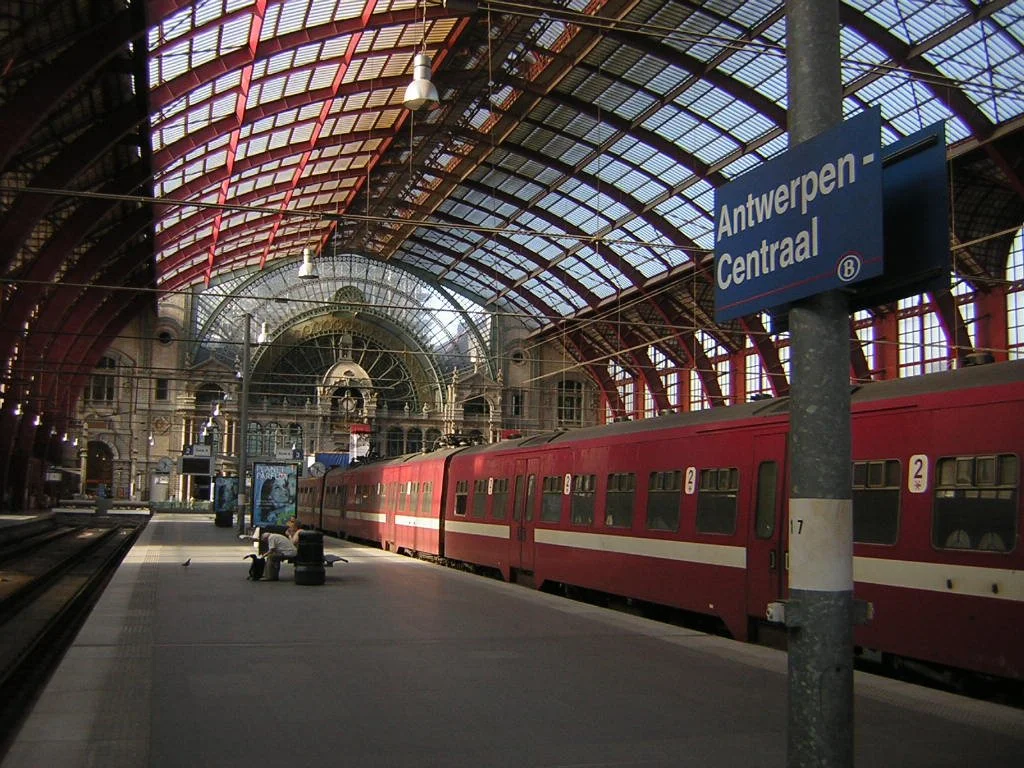
The Last Afternoon in Antwerp (5:20) is a audio piece that was created for the RSA annual show ‘Between Late and Early’ 2013
It features short extracts from a found tape correspondence and improvised music from a live session in Almaty, Kazakhstan by Sacha Chikmakov (guitar), Zoë Irvine (computer) and Denis Kolokol (Electronics).
The Last Afternoon in Antwerp
Voice and text work, video duration 5:20, 2007
A Night walk in the Brazilian Amazon with Anthony the jungle guide.
Recording: Zoë Irvine
Edit: Andy Sim
Also released on Vibro Files “Citizen Band” Issue (CD) in 2007
Audible Picture Show (curated by Matt Hulse) de Player/ BIG MAG Editions (vinyl) 2011
and shown in Between Late and Early (curated by Eddie Summerton)at the RSA Edinburgh 2013
Nightwalk – Torch Required
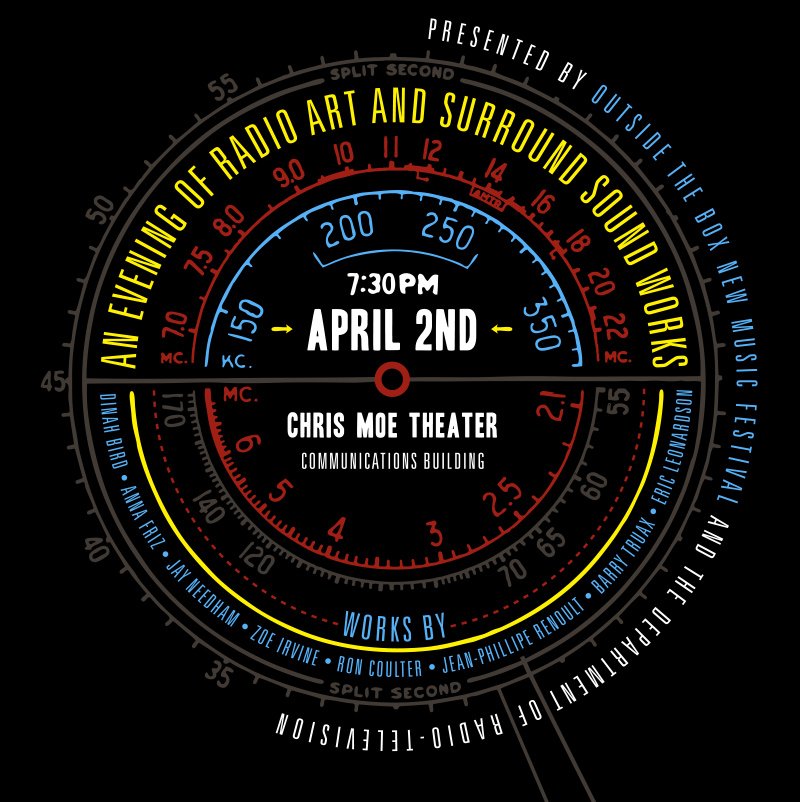
4 channel acousmatic sound work presented in a concert setting.
Distance and Proximity: Indoor (02:52)
An improvisation for one family and two recorders at differing distances from one another in a confined space.
Distance and Proximity: Outdoor (04:42)
An improvisation for one family and two recorders at differing distances from one another in a wide open space.
This work is part of a series of pieces exploring voice as connective tissue, beyond its existence as a carrier signal for verbal communication. It is truly a visceral presence in our lives, traveling through our bodies from before we are born and resonating in our bones even if we become deaf. Of course when we listen to someone speak we hear in the voice their accent and tone, we are always, consciously or subconsciously, forming opinions, piecing together clues and considering the biological, psychological and social status expressed in what we hear. But we also use our voices simply to get a sense of space and to occupy it both literally and metaphorically, we vocalize and listen to sound out, to measure, to inhabit, to be present and to play.
Here everyday scenarios of a family inhabiting and measuring space with voice were presented in a concert setting.
The title is taken from a book of poems by Thomas A. Clark.
The piece was commissioned by Out of the Box music festival, Southern Illinois University 2011
Distance and Proximity
In this film artist Wendy McMurdo was exploring humanoid robotics, one the most complex and often provocative areas of artificial intelligence. The film is balletic and otherworldly, theatrical and graceful. It poses the question – at what point are we willing to believe that we might form a real bond with a machine?
For the soundtrack I responded to these ideas by sampling and manipulating operatic voice to create a sound world that sits on the cusp between the natural and the artificial. The voice is recognisable, full of life, breath, and then feels manipulated and extended, machine like. The overall soundtrack aims to both separate the viewer in a kind of floating suspension but then connect with just enough characterful diegetic sound design to connect with the space. Offenbach’s ‘Olympia’ Aria (for a mechanical doll) is the climax to the sound design.
There was no synch sound from the shoot. When creating the soundtrack I was able to visit the Bristol Robotics Lab where the film was shot and record an array of sounds there. Lots of the sounds were designed and recorded in the studio with the help of insects, voice samples and a carpet cleaner.
Olympia was premiered at the 2011 Onedotzero film festival at the British Film Institute, London (and touring) and screened in 2012/3 as part of the Bloomberg Film Salons at the Institute of Contemporary Arts in London and at the Hackney Picture House, also in London.
Olympia
A creative documentary series Science Scams combines drama reconstruction and animation to reveal some of the greatest but lesser known scientific frauds from history.
The five episodes include: Beringer’s Lying Stones, the story of one man’s ill-fated search for scientific proof of divine creation; Meinertzhagen: Undercover Ornithologist, chronicling the extraordinary life of a WWI hero with a dangerous ambition for scientific fame; Elizalde’s Lost Eden, the unbelievable story of a stone age tribe discovered deep in the Philippine jungle in the 1970’s; Kempelen’s Chess Playing Automaton, the story of a mysterious technological marvel of the 19th century; and Redheffer’s Perpetual Motion Machine, how one man gifted the holy grail of engineering to the world, or did he?
Science Scams was commissioned for Channel 4 Daytime and was first screened in February 2007 with repeats throughout 2007 and 2008.
Meinertzhagen: Undercover Ornithologist was nominated in the Scottish Short Film Awards 2007
Science Scams
New Ten Commandments: The Right to Privacy takes a humorous approach to a serious subject. Produced by Lansdowne Productions and SDI Productions for BBC Scotland and Creative Scotland. The Right to Privacy was based on the story of one man and his relationship with his bike.
One of the joys of working with this animation was bringing a level of realism into the sound. I spent ages crafting just the right squeaky shoe sound, the perfect bike sounds, the lift, the bucket clanks, the sense of hallway, bathroom and corridor spaces. Jim Sutherland provided beautiful original music which combined with samples to provide more ‘genre’ moments of shock.
Director Alice Nelson
Animation – Igloo Animation
DoP – Ian Dodds
Dialogue Recordist – Marcelo de Oliveira
Composer – Jim Sutherland
Sound Designer – Zoë Irvine
The Right to Privacy
This was the first time I worked with the director Alice Nelson, it is a wonderful film, the story of her father’s journey, in the 70s from Dublin to Moscow in ‘Supervan’. The film offered lots of opportunity for creative work with sound and score and formed the basis of an exciting creative relationship, allowing me to contribute to other film’s Alice has directed, including Science Scams and War Letters.
To date, A Map with Gaps has screened at over 40 international film festivals, and won ten awards including Grand Jury Award: Best Short Documentary at Slamdance Film Festival, 2007
Director/Producer: Alice Nelson
Animation & Editing: Alan Brown
Sound Design, Music Supervision & Original Scoring: Zoe Irvine
DoP: Ian Dodds
A Map With Gaps
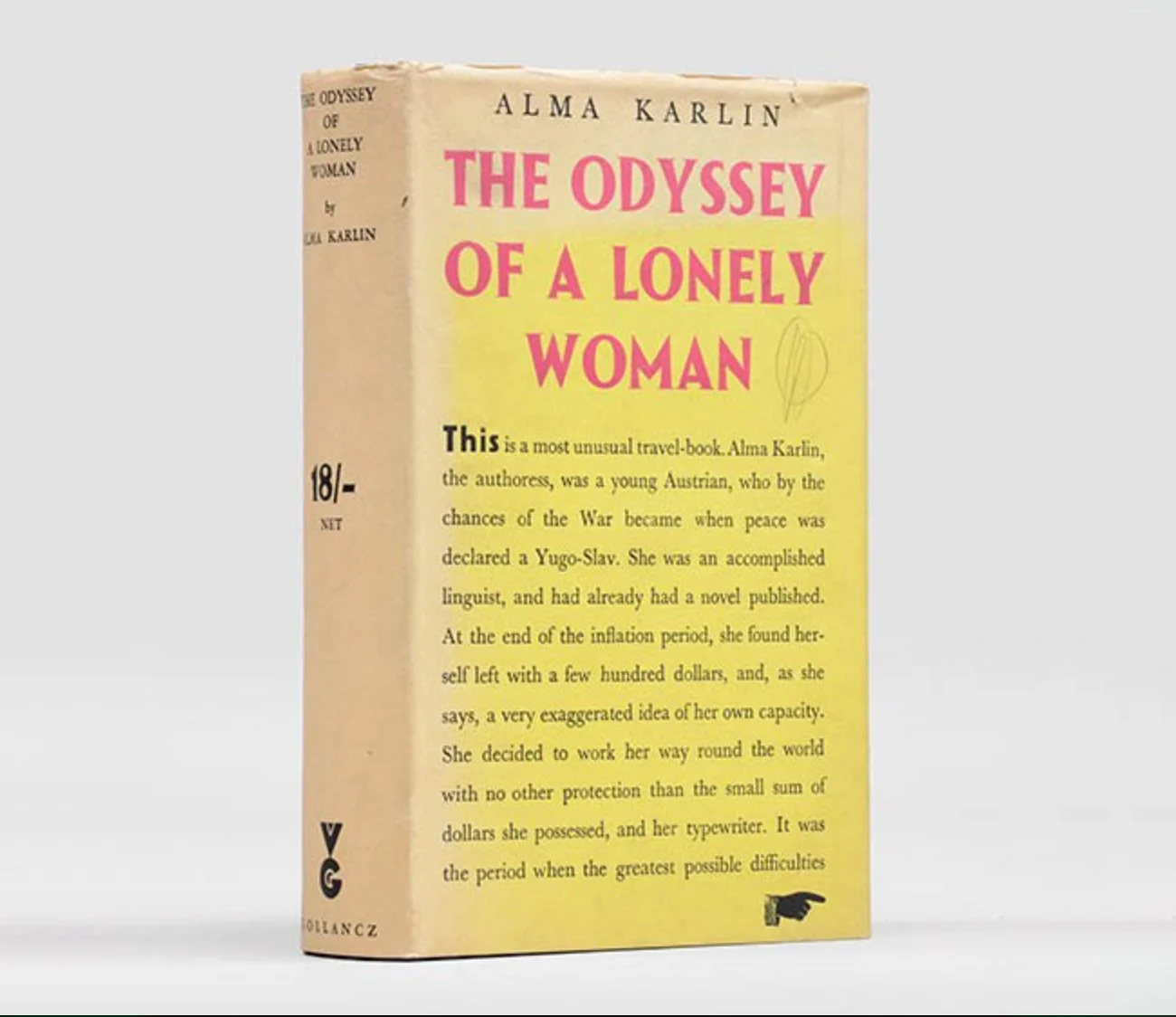
Travels Together is a radiophonic work on the trail of Alma Maximilane Karlin (1889-1950). Karlin was an extraordinary Slovenian traveller and writer. In the autumn of 1919 she set off on a global journey that was to last for 8 years including South Peru, Mexico, Japan, Korea, Borneo, Australia, New Zealand, Java, Thailand and India… Travels Together covers the beginning of the journey, as Alma leaves her home town of Celje in Slovenia, which was then part of the Austro-Hungarian Empire and attempts to take a ship to any far away destination which will have her. The work weaves extracts from the first chapter of Karlin’s book “Einsame Weltreise” (The Odyssey of a Lonely Woman) together with my journey in her footsteps.
Extracts from Odyssey of a Lonely Woman read by Vivien Löschner. Other voices heard (in order of appearance): Assistant at Celje Tourist Office, Gerald Straub; Marijan Pusavec writer and librarian at Celje Central Library; A Keeper of Porkrajinski Museum, Celje; and members of the Ostercek family.
TRAVELS TOGETHER
Sound Design & Score Zoë Irvine
Duration 40mins
Give Me A Reason to Live recorded at Festival Cement, Den Bosch, Holland, March 2014. Performed in black box theatre. Inspired by the work of medieval Dutch painter Hieronymus Bosch, particularly the role of beggars/cripples as possible symbols of sin, Give me a reason to live is a study in the notion and provocation of empathy.
A live memorial to the disabled victims of the Nazi Aktion T4 euthanasia program of the mid 20th Century, and disabled victims of the current UK government’s so-called ‘welfare reform’, Give Me a Reason To Live is a test of body, and of faith.
Give Me A Reason To Live by Claire Cunningham
1998 – 2008 (but then on and on…)
Did you ever see fragments of audio tape flapping in the wind? Snagged round a branch or lamp post? trailing down the road? If you have you are probably of my vintage. It is certainly far less common now than it was in 1998 when I first picked up a piece of tape, cleaned the clag off, spliced it into a cassette and listened to the revelatory sound of chewed and mangled ‘tutti fruti’. I have collected, respooled, listened to and worked with tape fragments ever since.
This project has had many foci and iterations over the years, it has been a great tool for exploring landscape, community, migration, music and medium. There have been installations, radio programmes and live performances, CDs, artist books and an ever growing MP3 archive.
Magnetic Migration Music
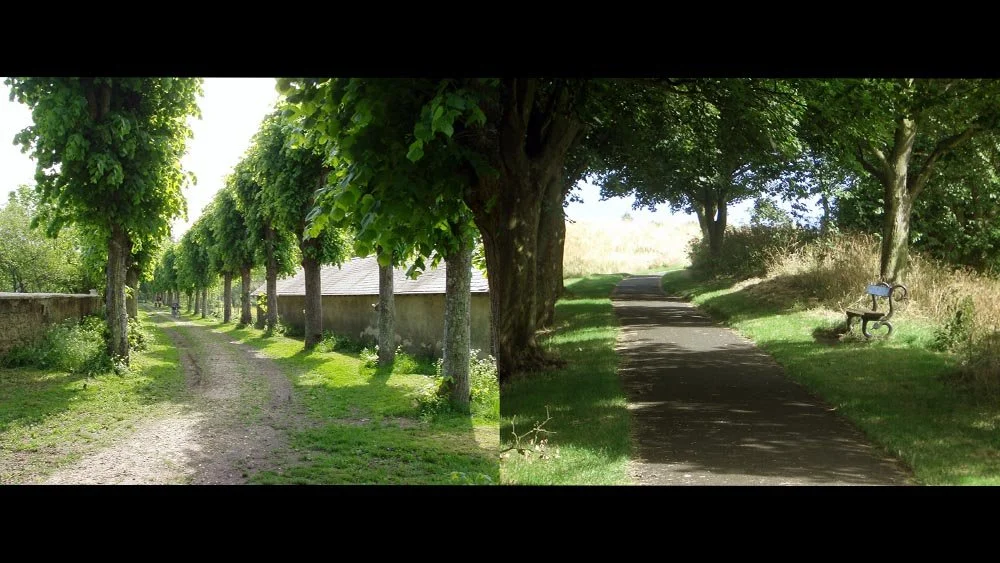
A multi layered soundscape composition (2 CDs: Irvine) and ornately interwoven visual narrative (2 sided concertina book: Helen Douglas), exploring a sense of memory and place. Inspired in the month of May by a visit to Illiers Combray, the small town immortalized by Marcel Proust in his epic novel In Search of Lost Time, Irvine and Douglas weave together their own distinct mythologies and reveries; their subjective responses elliptically united by their shared sense of place.
It was released as a double mini CD and artist book in 2004 and reworked as a sound walk for the Berwick Film Festival in 2006
Illiers-Combray
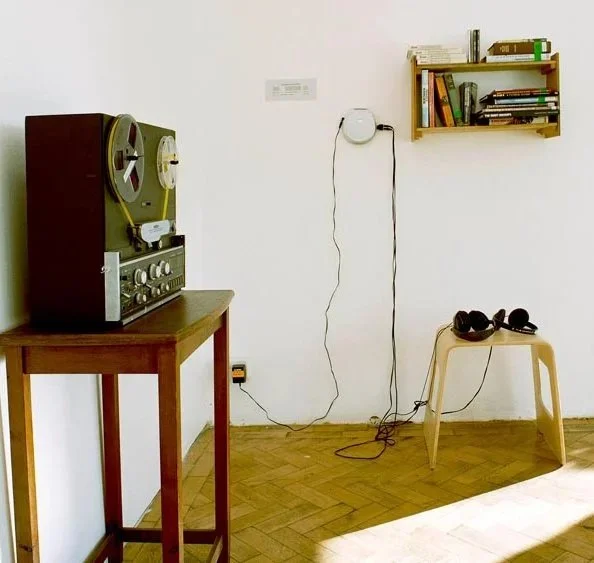
Radio 101 was an exhibition and FM radio station at the BCA Gallery, Bedford in 2004. It followed on from a 3 month residency Irvine spent exploring the history of the R101 airship which was built at nearby Cardington in the 1920s.
The project was an attempt to delve into the layers of history, symbolism, and the cultural impact of this national tragedy.
The R101 set off on its ill-fated maiden voyage destined for Karachi on Saturday 4th of October 1930. The journey however finished in disaster as the R101 came down, after a flight of just 7.5 hours, at Allonne near Beauvais outside Paris. Of the 54 on board only six survived. The episode was a national tragedy and symbolised the end of empire, it also stirred up many stories of supernatural activity.
Radio 101
Highwinds text here